
Overview
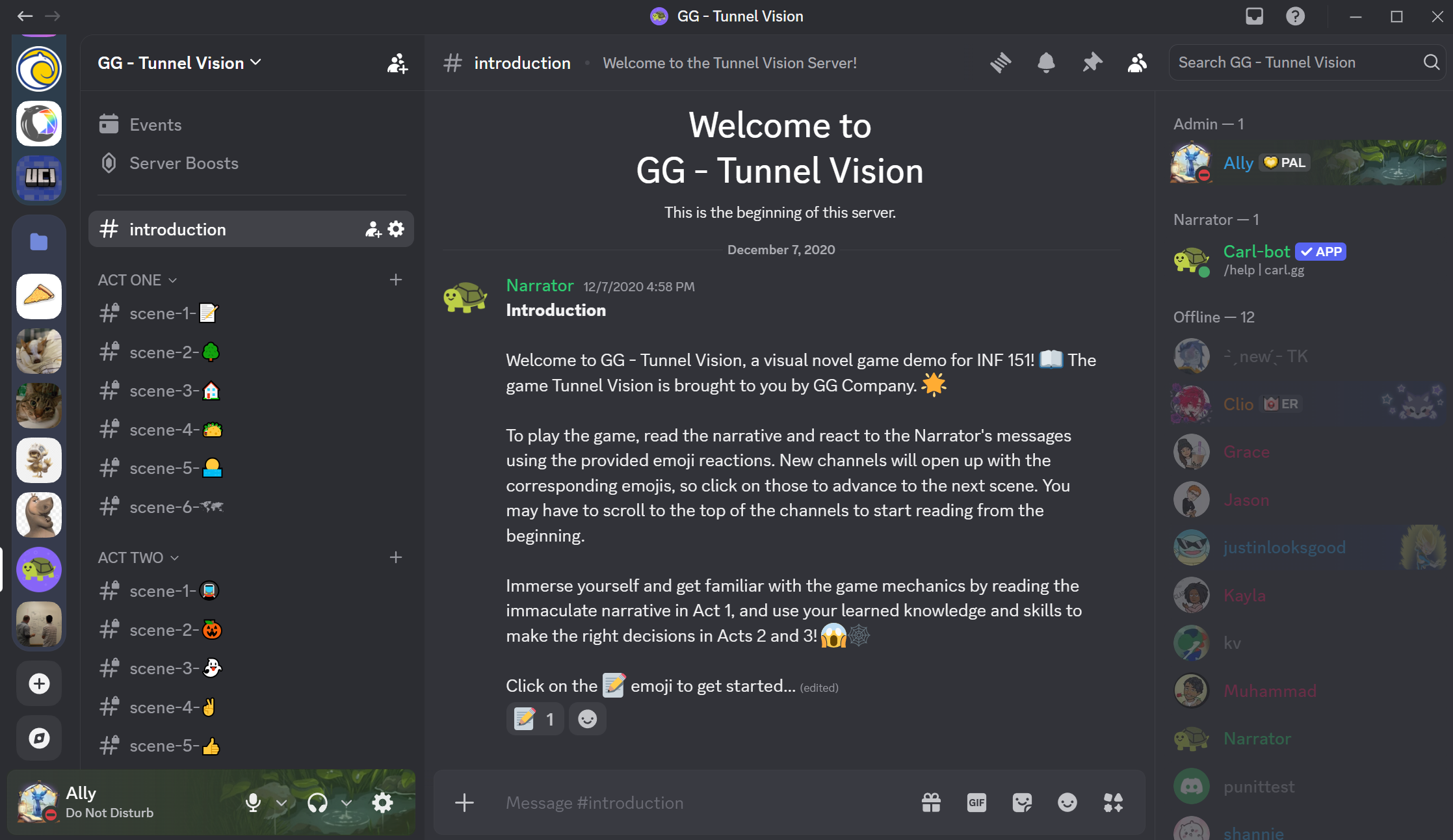
Tunnel Vision is a horror-themed “Choose Your Own Adventure” game demo designed as an interactive narrative experience. We built the game inside Discord, turning text channels, reactions, and role permissions into the game's branching structure.
Players progress through the story by making choices through emoji reactions. Each choice grants access to different Discord channels, allowing players to follow different branches of the narrative and reach alternate endings.
Concept
We wanted to create a game that could be experienced remotely and shared easily with friends. Because the project was being developed during the pandemic, accessibility and ease of implementation were important constraints.
We chose a horror story inspired by the UCI tunnels and structured it around player decisions, creating a narrative where choices could change the direction and outcome of the story.
Interactive Narrative
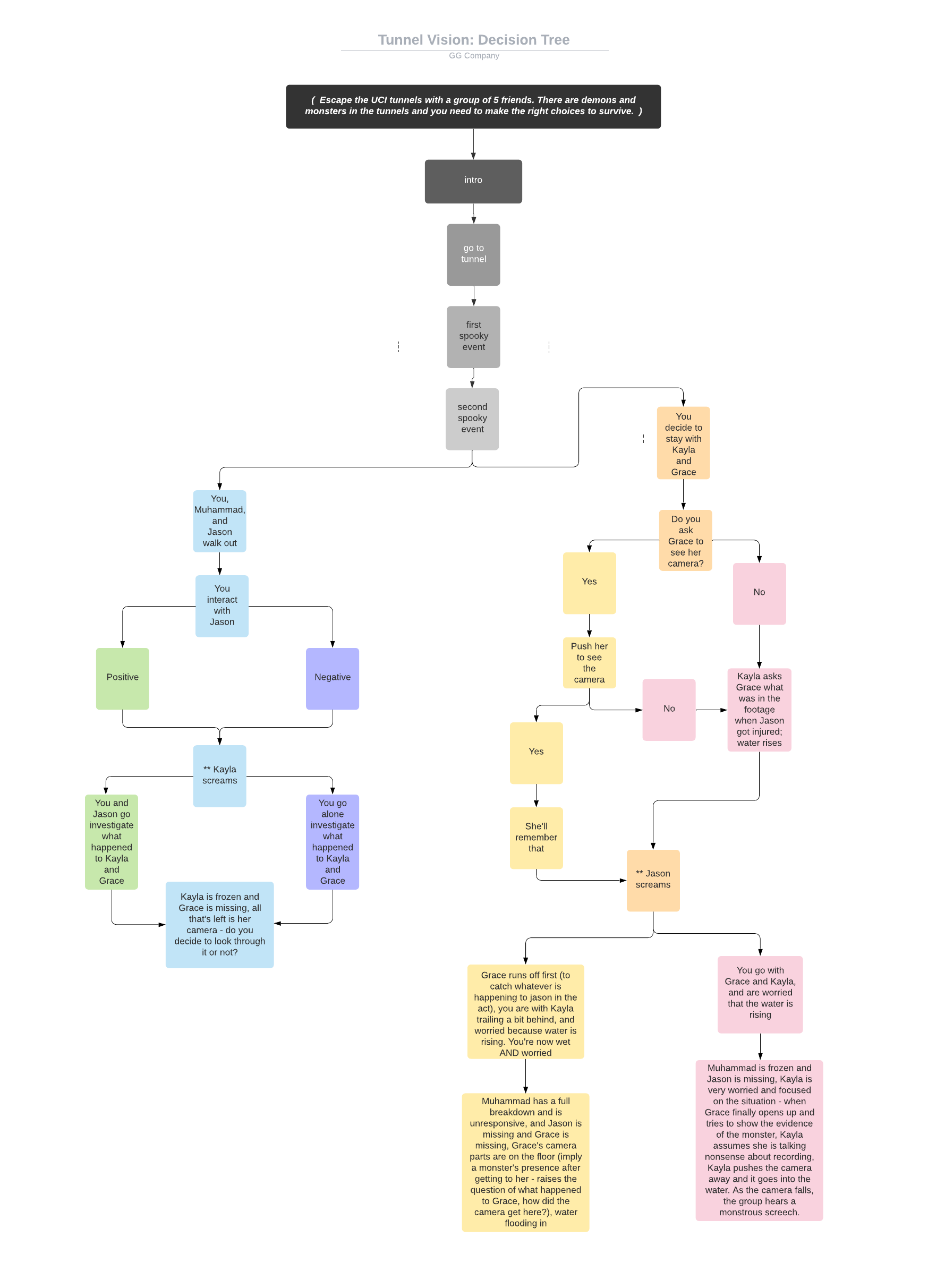
Before implementing the story, we mapped out the branching structure using a decision tree. Each branch represented a different player choice and determined which scene the player would encounter next.
This helped us visualize the overall flow of the story, identify branching points, and organize the alternate endings before moving into implementation.
Story Development
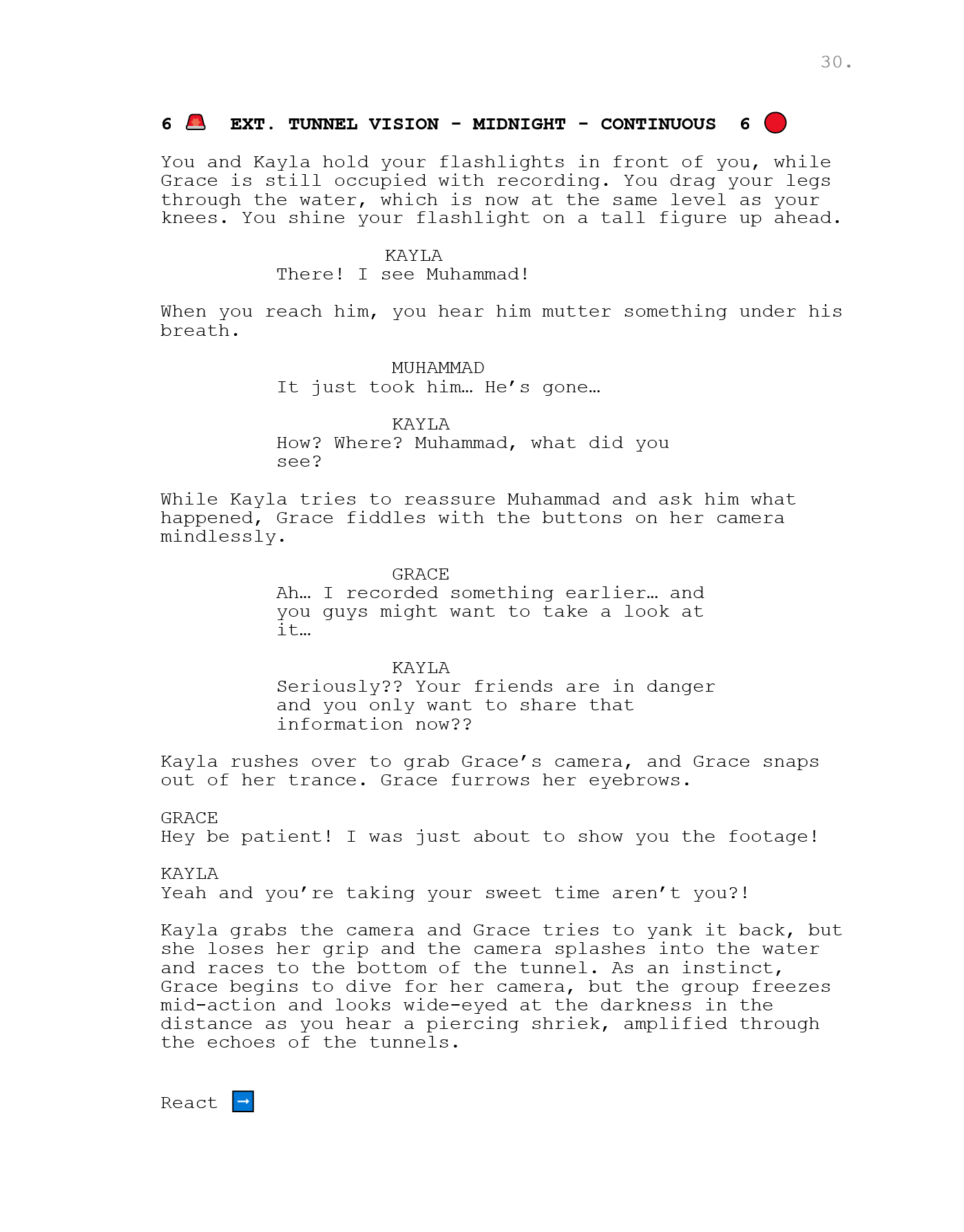
After establishing the story structure, we collaborated on a multi-scene script and divided the narrative into individual scenes. We designed decision points that would allow players to take different paths through the story rather than following a single linear progression.
The final script contained two acts and more than 30 pages of narrative content, which we then translated into individual Discord channels.
Testing & Iteration
Implementing the game revealed several issues that were difficult to anticipate during planning. Early versions of the Discord bot did not correctly assign access to new channels because it lacked the necessary server permissions.
We also discovered that overly long messages could prevent the bot from behaving as expected without providing a clear error. These issues required troubleshooting and changes to how we structured and implemented the narrative.
Player Experience Challenges
Testing also revealed a usability problem in the Discord format. When players gained access to a new channel, Discord could position them away from the beginning of the narrative, creating the possibility of accidentally seeing spoilers.
We could not fully control Discord's scrolling behavior, so we added instructions to the game's introduction explaining how players should navigate each new channel.
Final Result
The completed demo included 21 Discord channels and four alternate endings. Although we originally planned to build a larger story, limiting the project to the first chapter allowed us to complete a functional interactive experience within the available timeline.
The final implementation combined narrative design, branching choices, and Discord-based interaction into a game that could be played remotely and shared through a familiar platform.
Game Demo & Script
Experience the original Tunnel Vision demo and explore the script behind its branching narrative.
Reflection
The biggest lesson I took away from Tunnel Vision was how much planning goes into creating a branching narrative. Developing the decision tree and script helped me understand how each choice needs to feel intentional while still leading to a cohesive overall story. I also learned that implementing an interactive story requires thinking beyond the narrative itself and considering how players will navigate, understand, and experience each branch.
The project also showed me the importance of testing an experience from the player's perspective. Issues such as navigating between Discord channels and accidentally encountering spoilers were difficult to recognize during development but became much more apparent when considering how someone unfamiliar with the game would interact with it. This taught me to pay closer attention to the gap between how a designer expects an experience to work and how a player actually experiences it.