
Overview
EventBud is a mobile app for USC students to connect with each other, make new friends, and check out fun events. People won't have to go to events on their own or miss out on events because they don't have someone to go with.
Problem
Most USC students enjoy having an active social life, but they don’t always have a friend available to do things with.
Hypothesis
WE BELIEVE THAT providing a platform to connect FOR USC students who don't want to go to events by themselves WILL ACHIEVE more event-going and chances to make new friends.
Personas
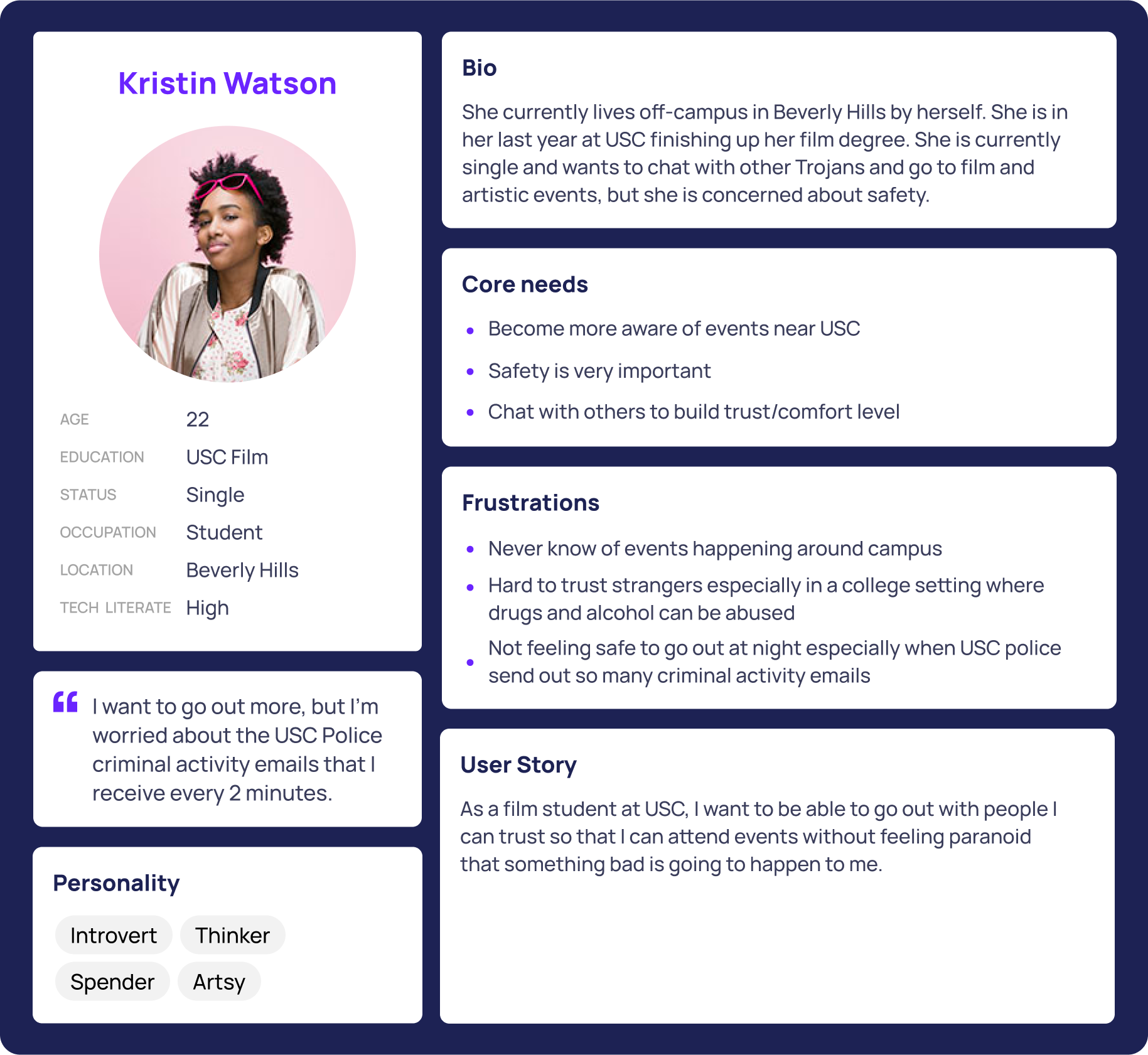
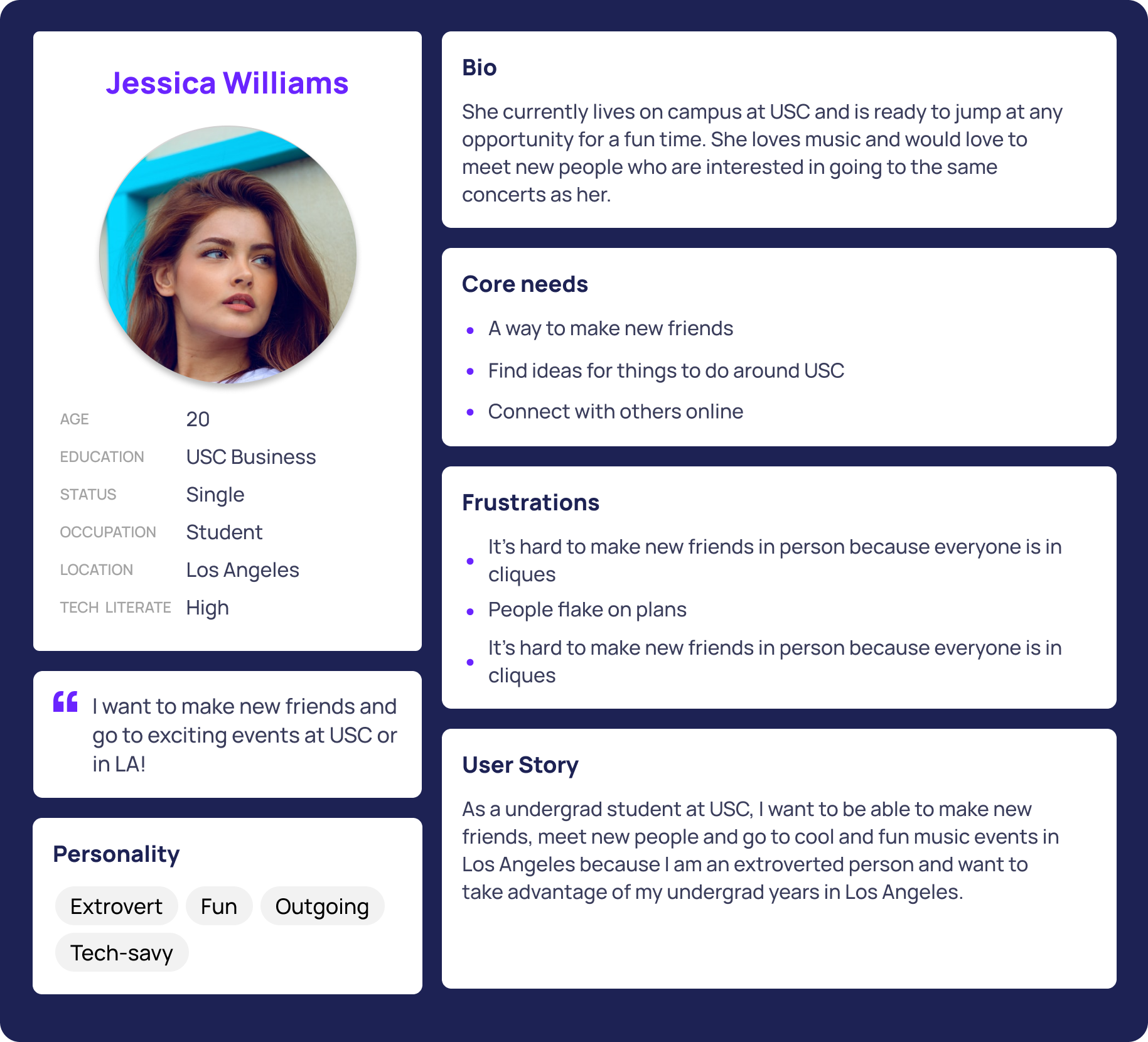
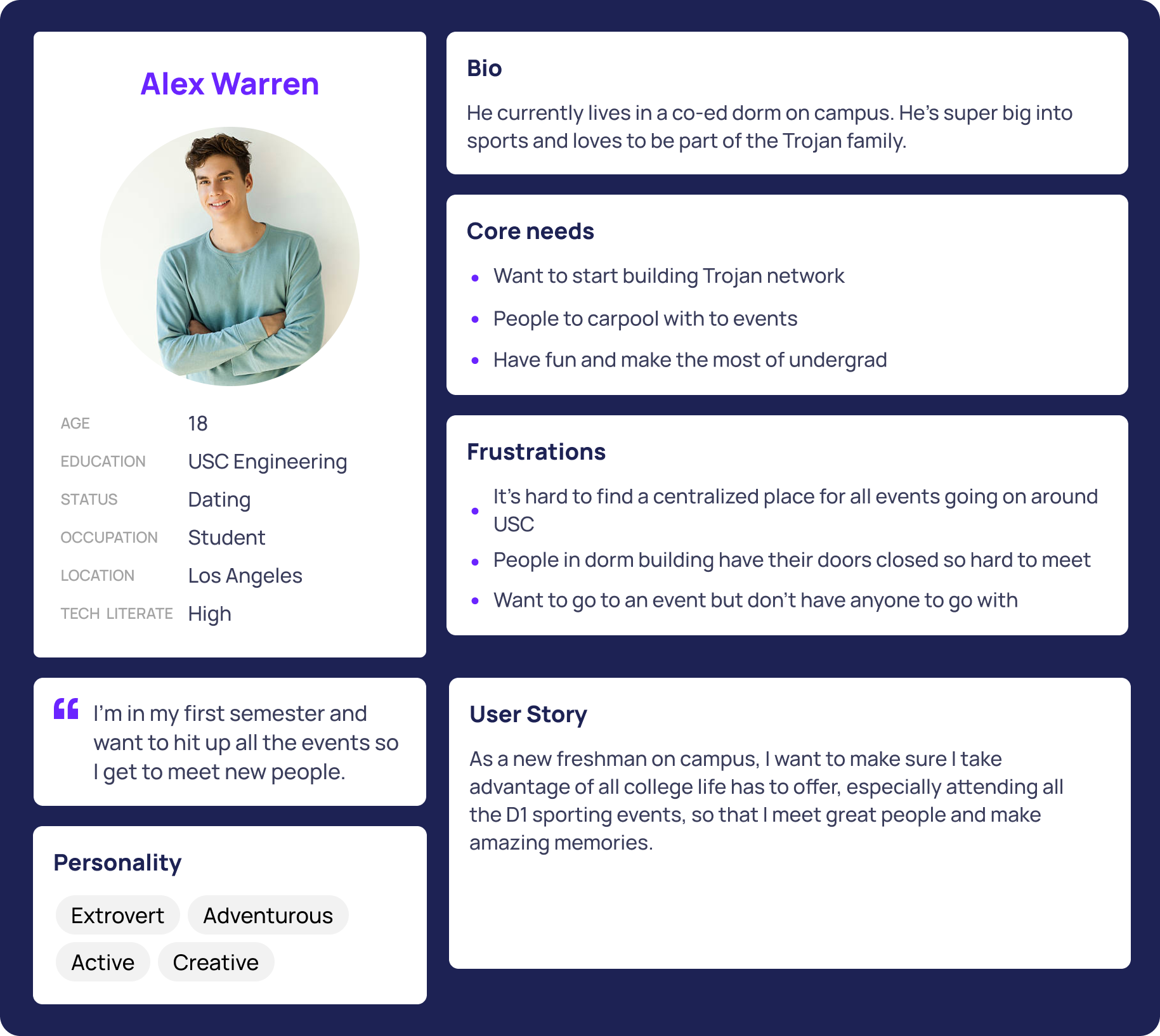
First, we created three personas for different types of users for our app: one who wants to attend events but is concerned about safety, one who is ready to jump at any opportunity to have fun, and one who would like to focus on building his network.
Interviews
When we started interviews, we decided that we wanted to narrow our target audience to concert-goers. We interviewed 21 participants about concert experiences, safety concerns, and current concert app discovery.
High level insights gleaned:
- Include the ability to filter out drug use, drinking, etc.
- Important to have security feature to know who you went to a concert with and that your family/authorities know.
- Connecting to Apple Music / Spotify would be useful.
Testing Our Hypothesis
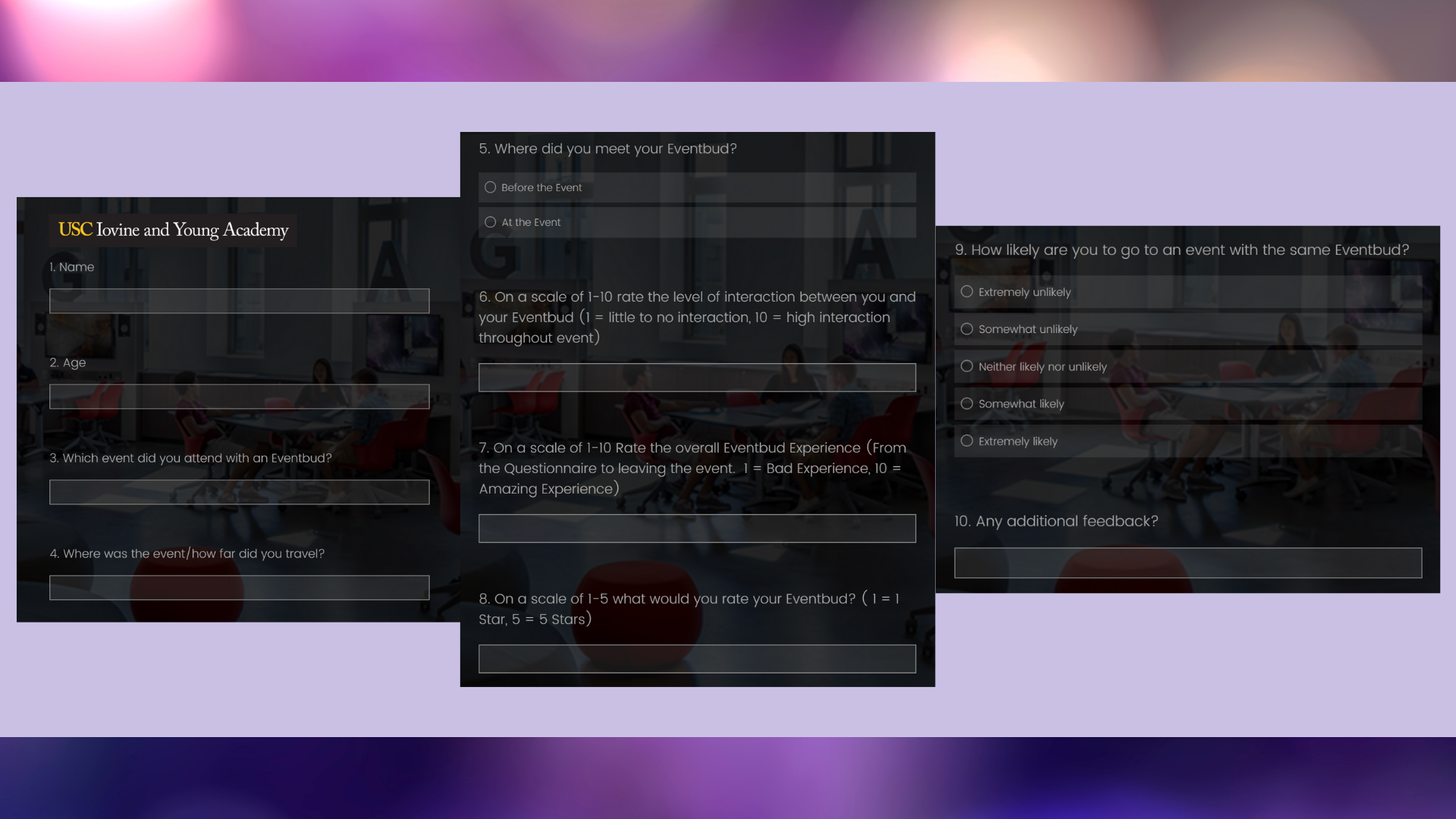
In order to test our hypothesis, we set up three experiments in the real world to see if strangers would be comfortable attending events together and what information they would need prior to meeting in order to feel comfortable. We sent a follow-up exit survey to evaluate their experience.
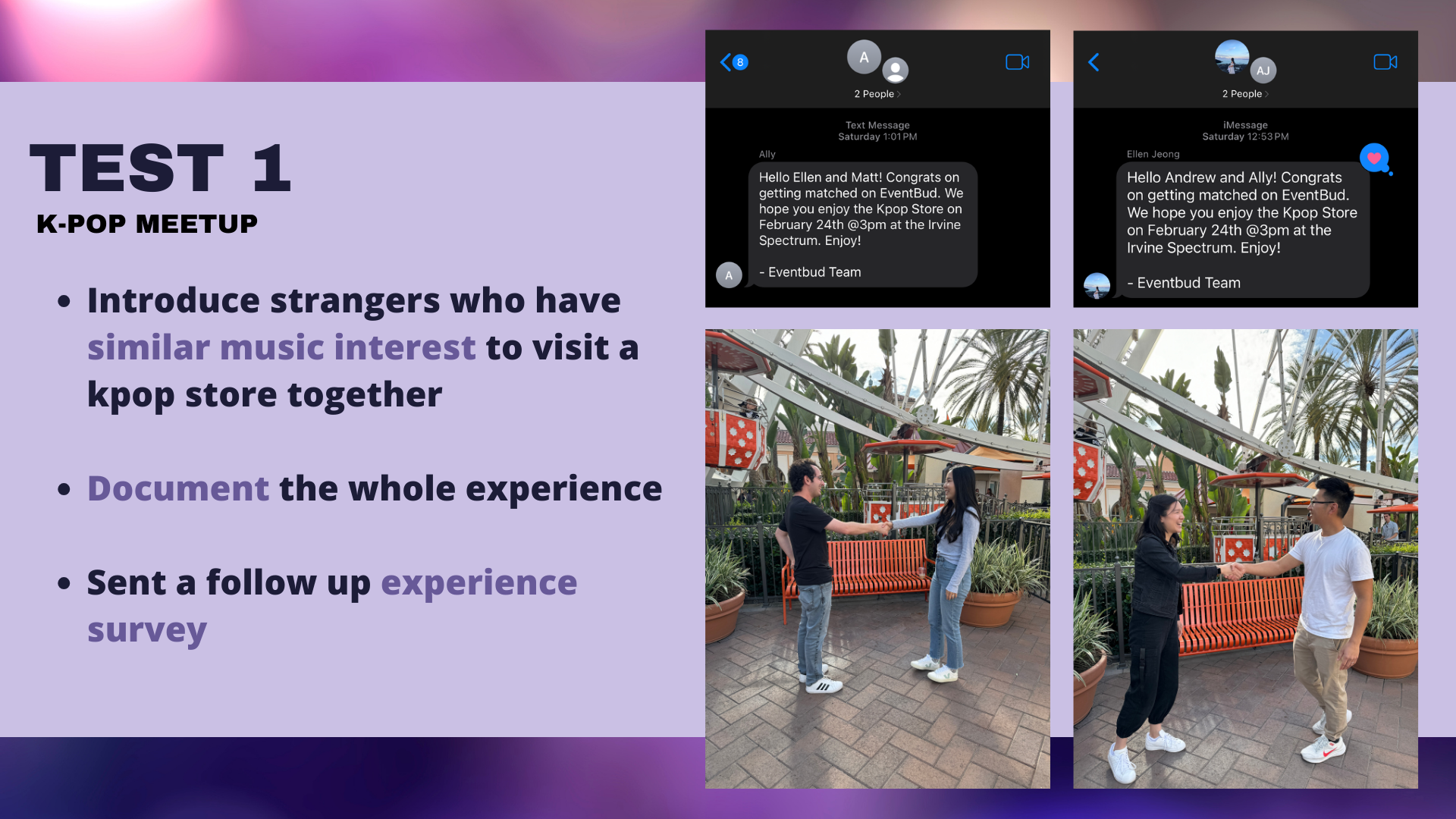
Test 1: K-Pop Meetup
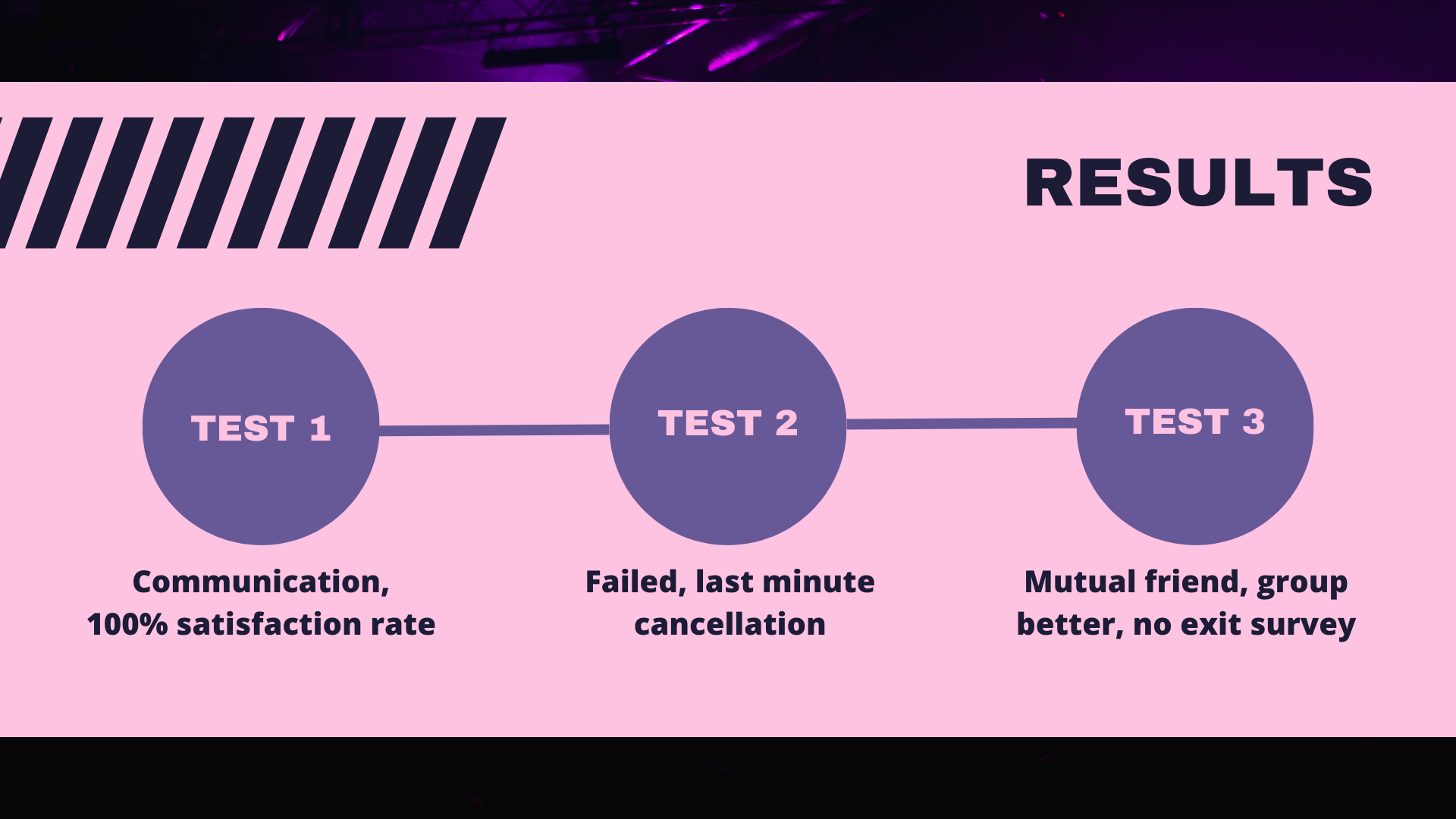
The first test involved a meetup between people with similar music interests. The pairs interviewed each other after exchanging a conversation, and the exit surveys showed a 100% satisfaction rate! However, interviewees commented that knowing more about the person they are meeting besides similar music taste would be helpful for more conversation starters.
Test 2: Gimme Gimme Disco San Diego
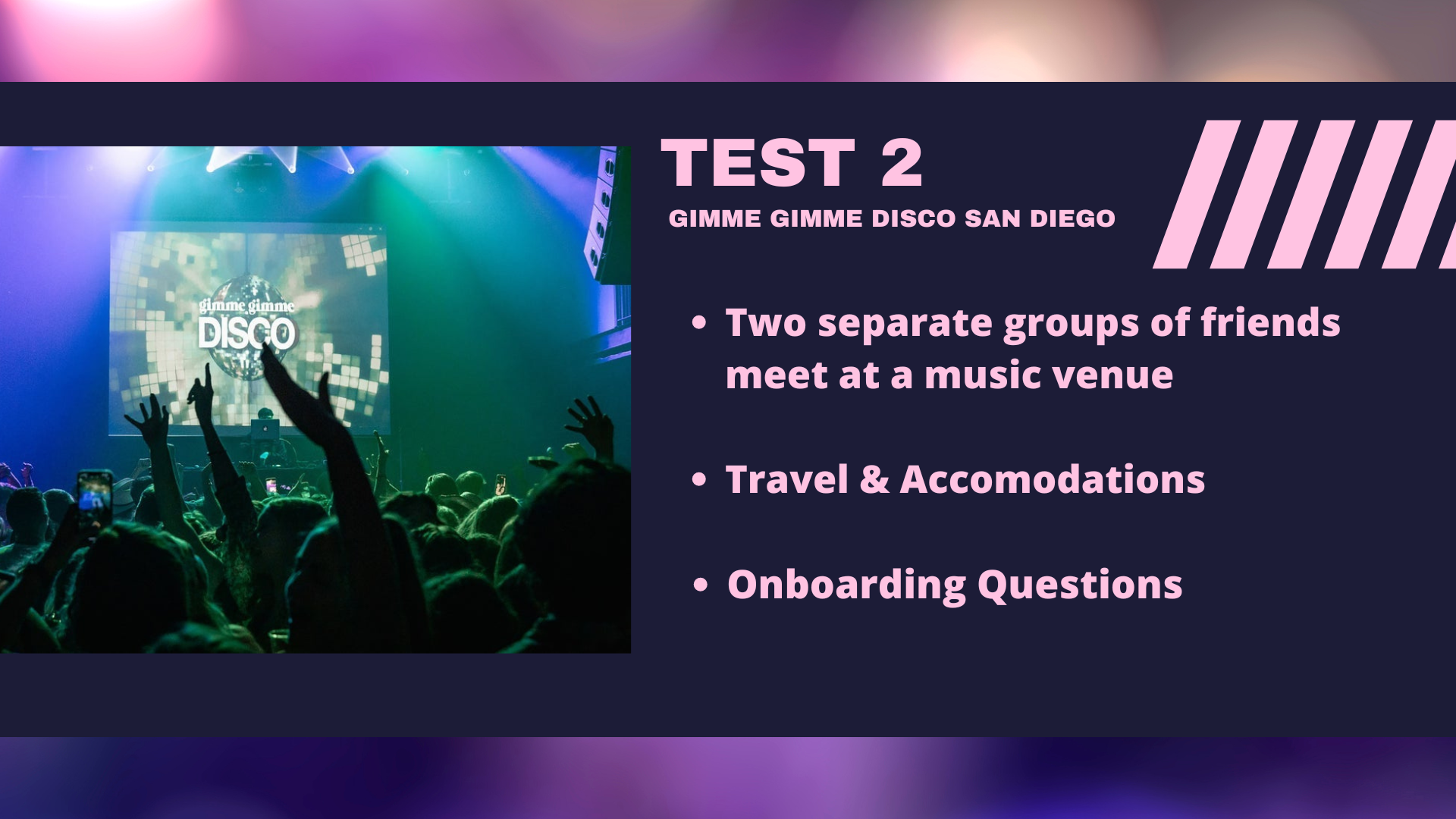
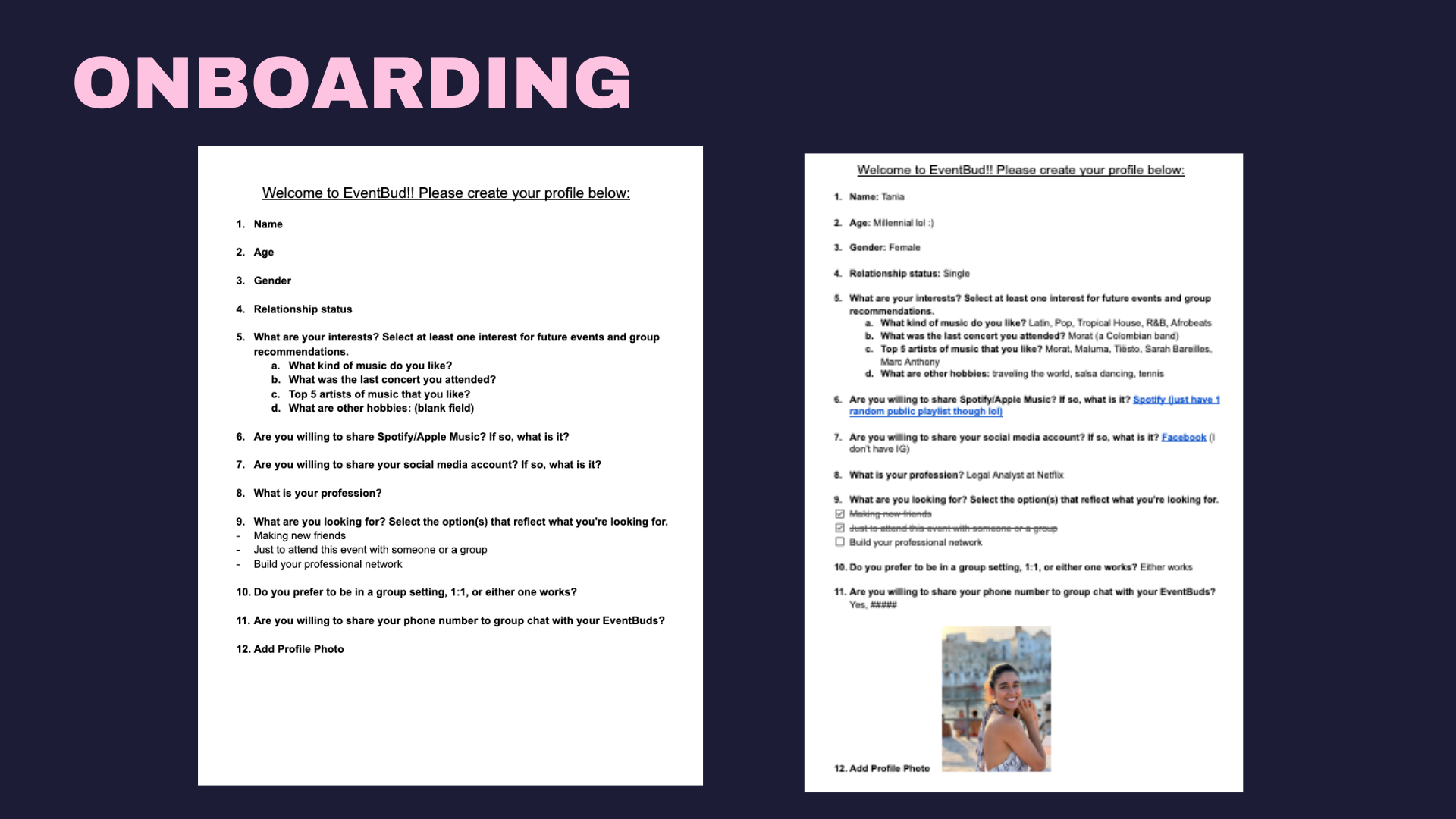
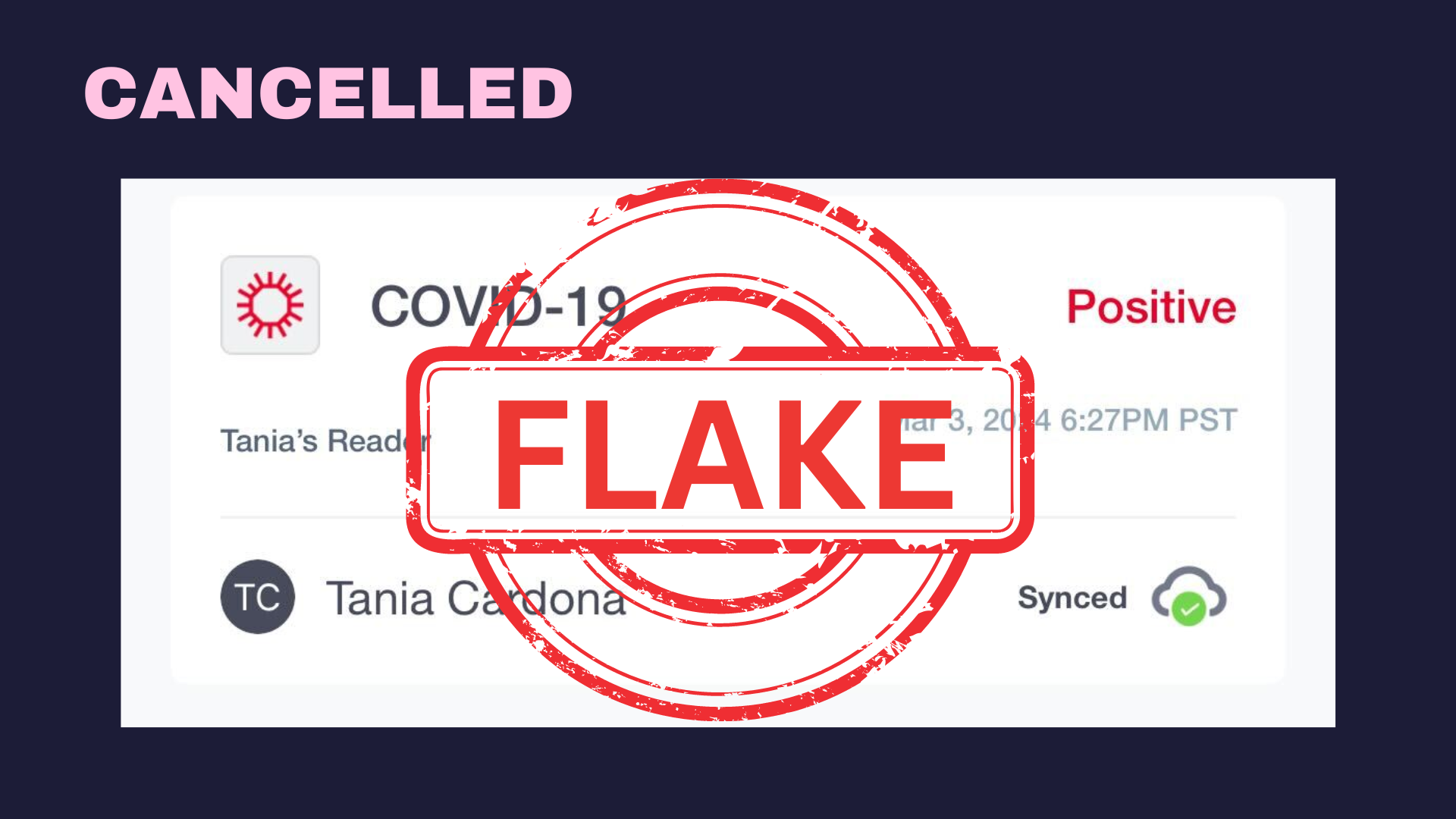
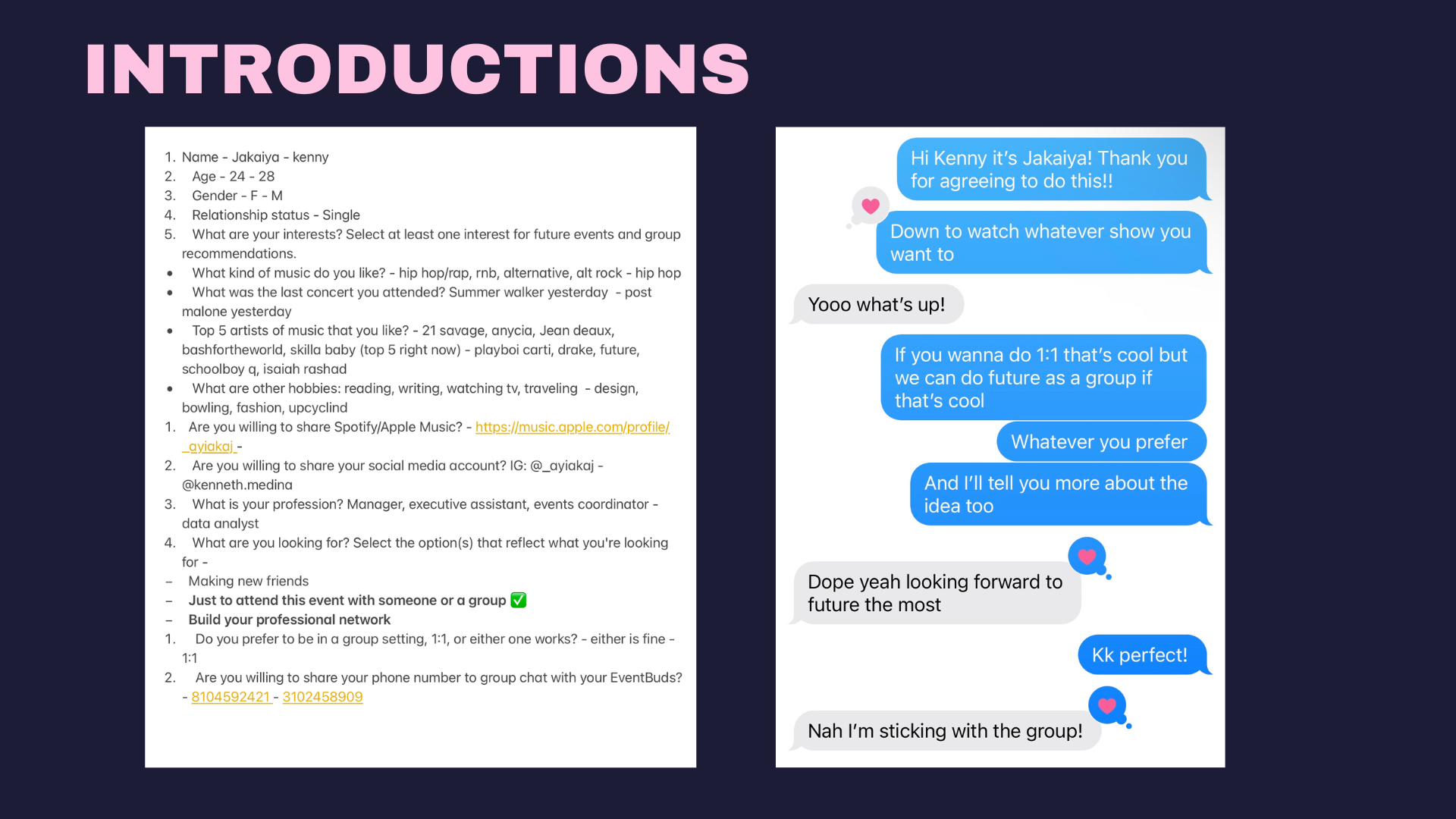
The second test involved two separate groups of friends who planned to meet at a music venue. This time, we asked everyone to fill out an onboarding questionnaire so that everyone has some prior information about the people they are meeting. However, one of the members tested positive for COVID and had to cancel on the meetup.
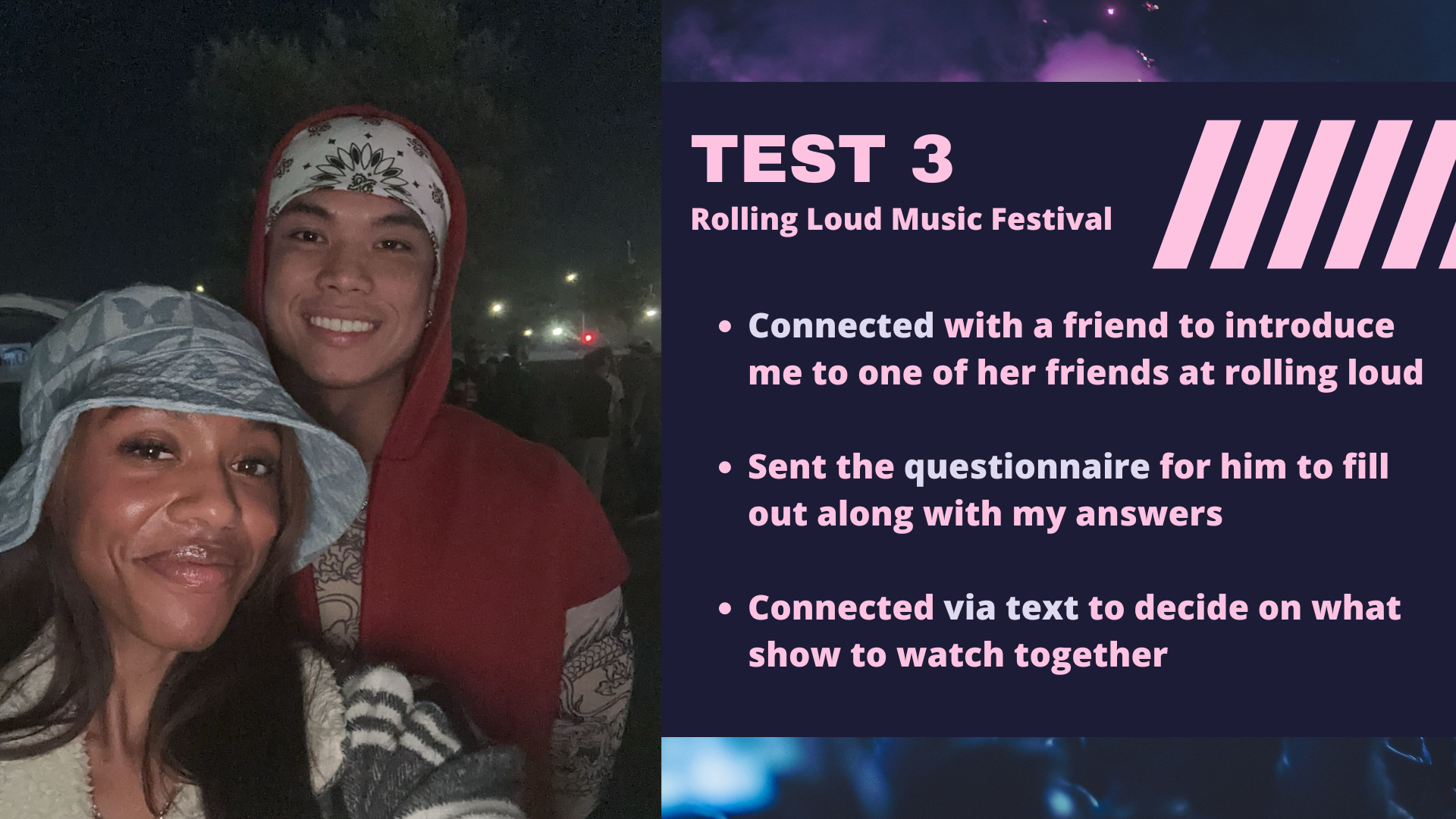
Test 3: Rolling Loud Music Festival
The third test involved connecting with mutual friends to attend a music festival. Similar to the second experiment, an onboarding questionnaire was sent to introduce the people first. Similar to the first experiment, an exit survey was sent out for completion, but users were not interested in filling out the exit survey.
User Research Insights
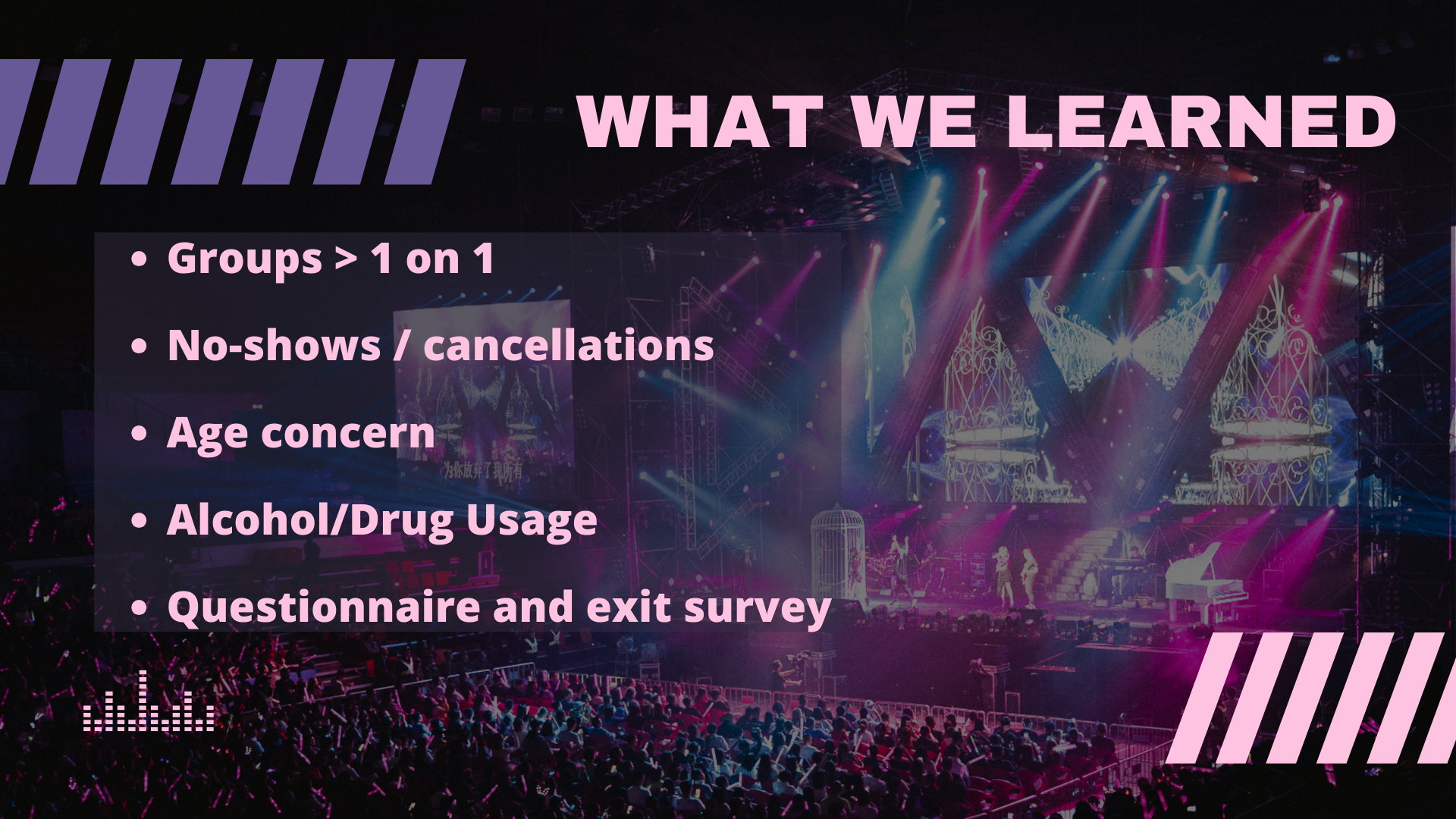
After doing 3 real-life experiments, we gleaned a few high level insights:
- People preferred meetups with a group (3 or more people).
- We need to figure out what to do if someone is a no-show or cancels at the last minute.
- Age was a top concern for participants so we want to give people the option to select matches by age range.
- We need to figure out a way to ask about alcohol/drug usage and preference, especially in an environment like a music festival for safety reasons.
- Some participants prefer not to fill out the follow up survey.
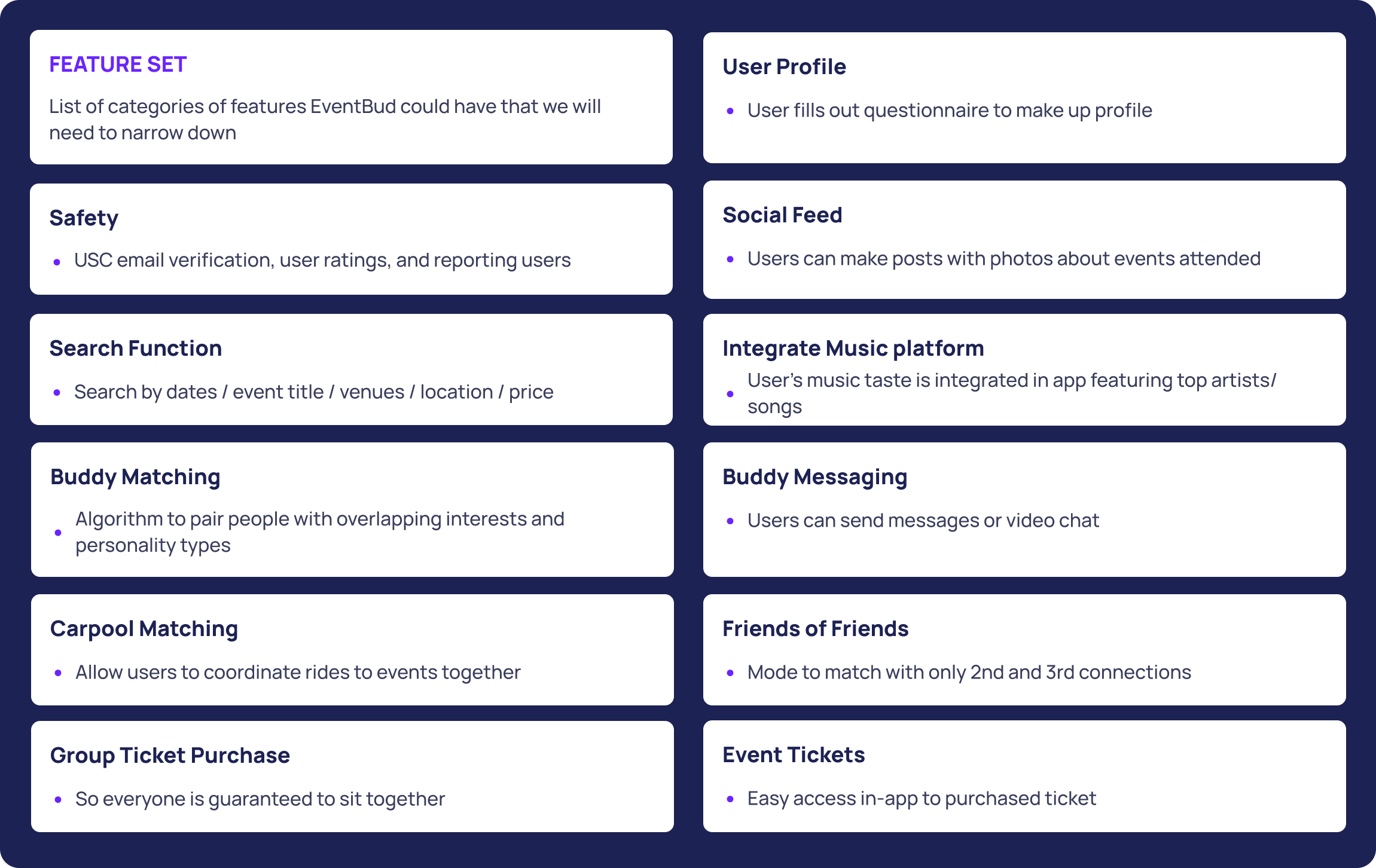
Feature Set
From our experiments and interviews, we gathered together possible features for our application.
Onboarding Research
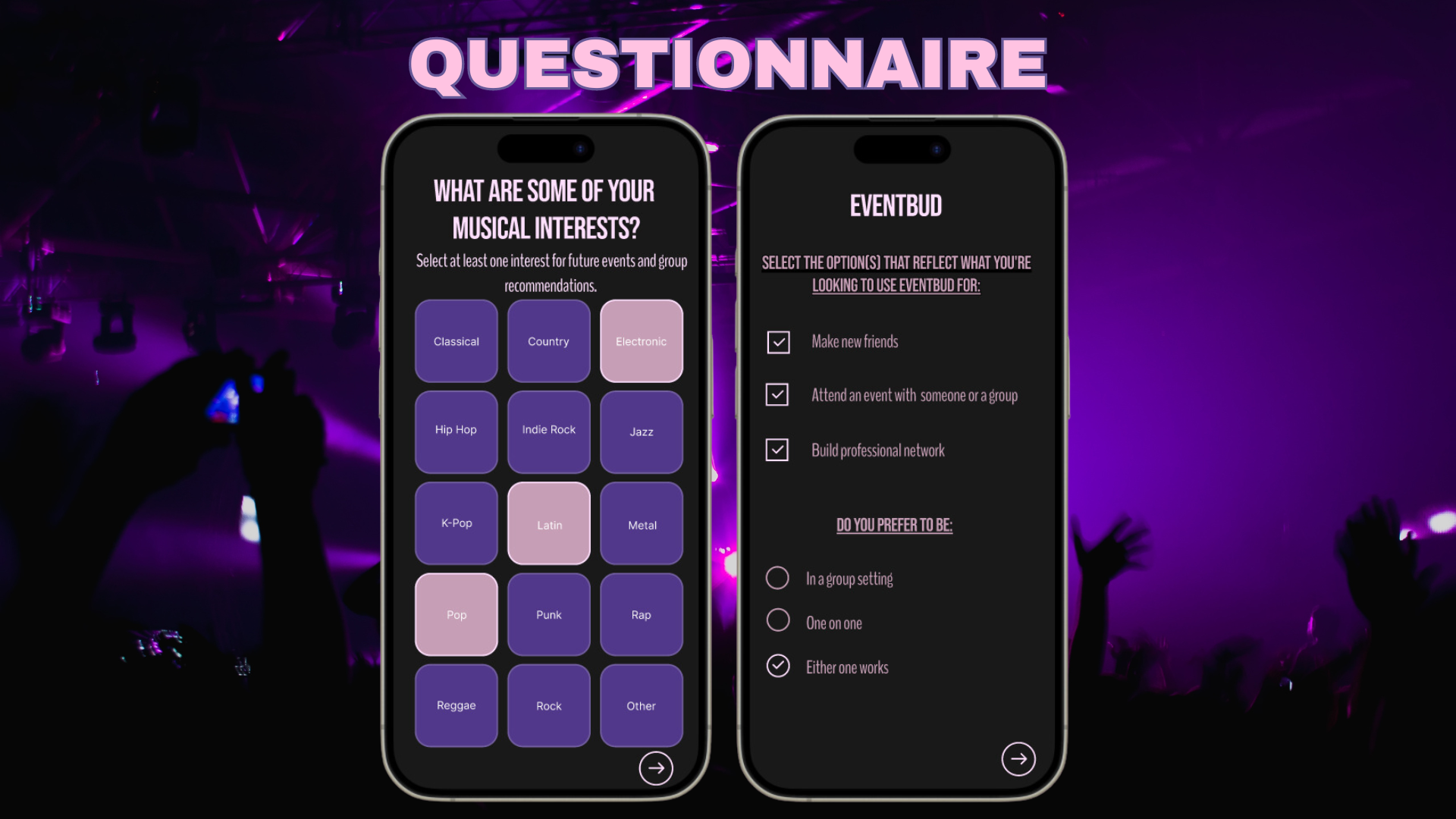
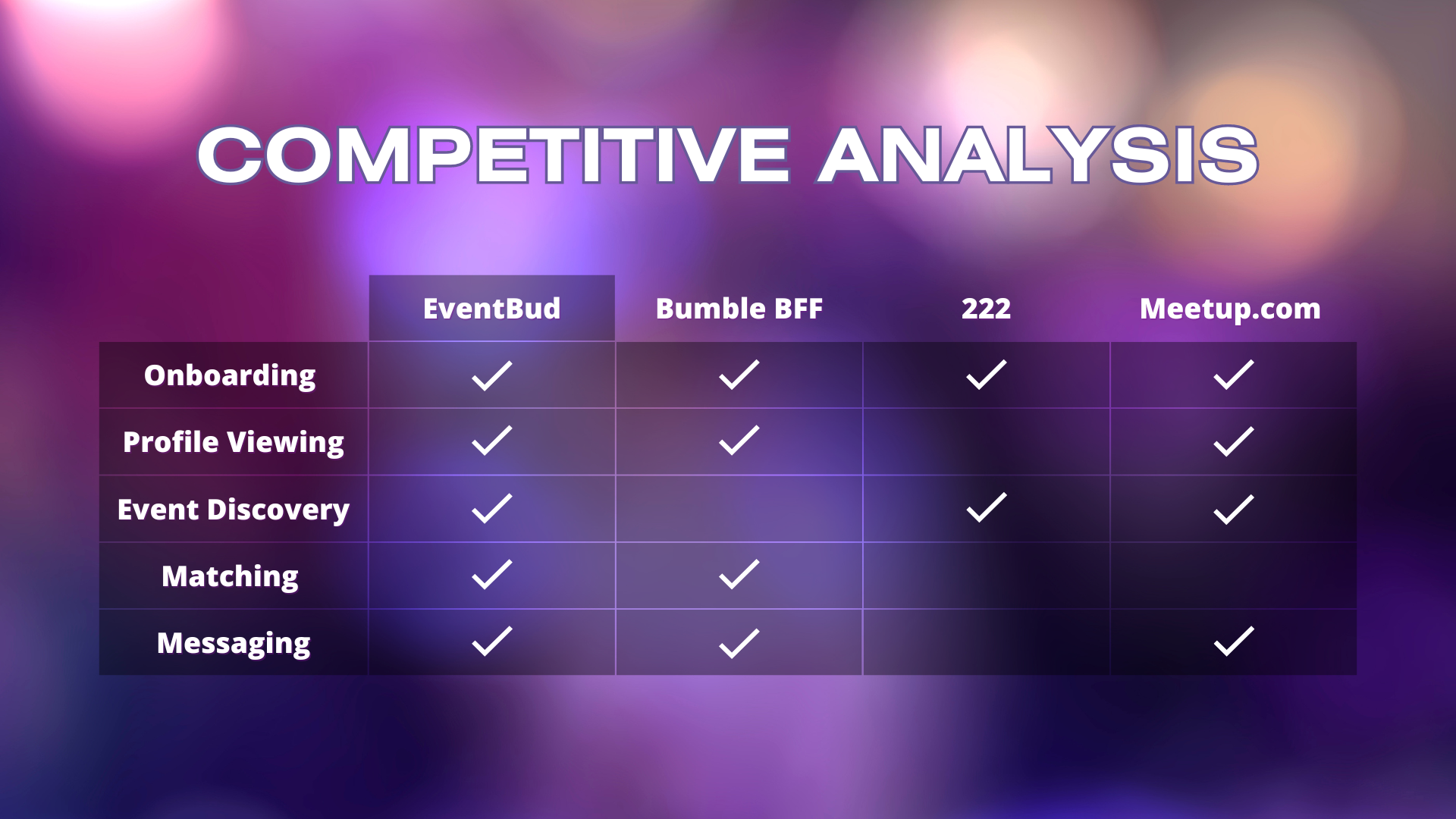
Before jumping into wireframing, we researched the onboarding process of apps 222, Dice, Headspace, and Meetup. We learned that many of them start with a questionnaire to curate the user profile rather than starting with a login screen like many prototypes do. Login screens drive the user away from an application as it is not as welcoming to have to give personal information first before testing out a service.
Low-Fidelity Wireframes
In order to test the user flow, we created low-fidelity wireframes to collect user reactions and responses to better our app for the final prototype.
Branding and Style Guide
For our design system, we decided to have a bold color and font to match the concert mood.
Key Features
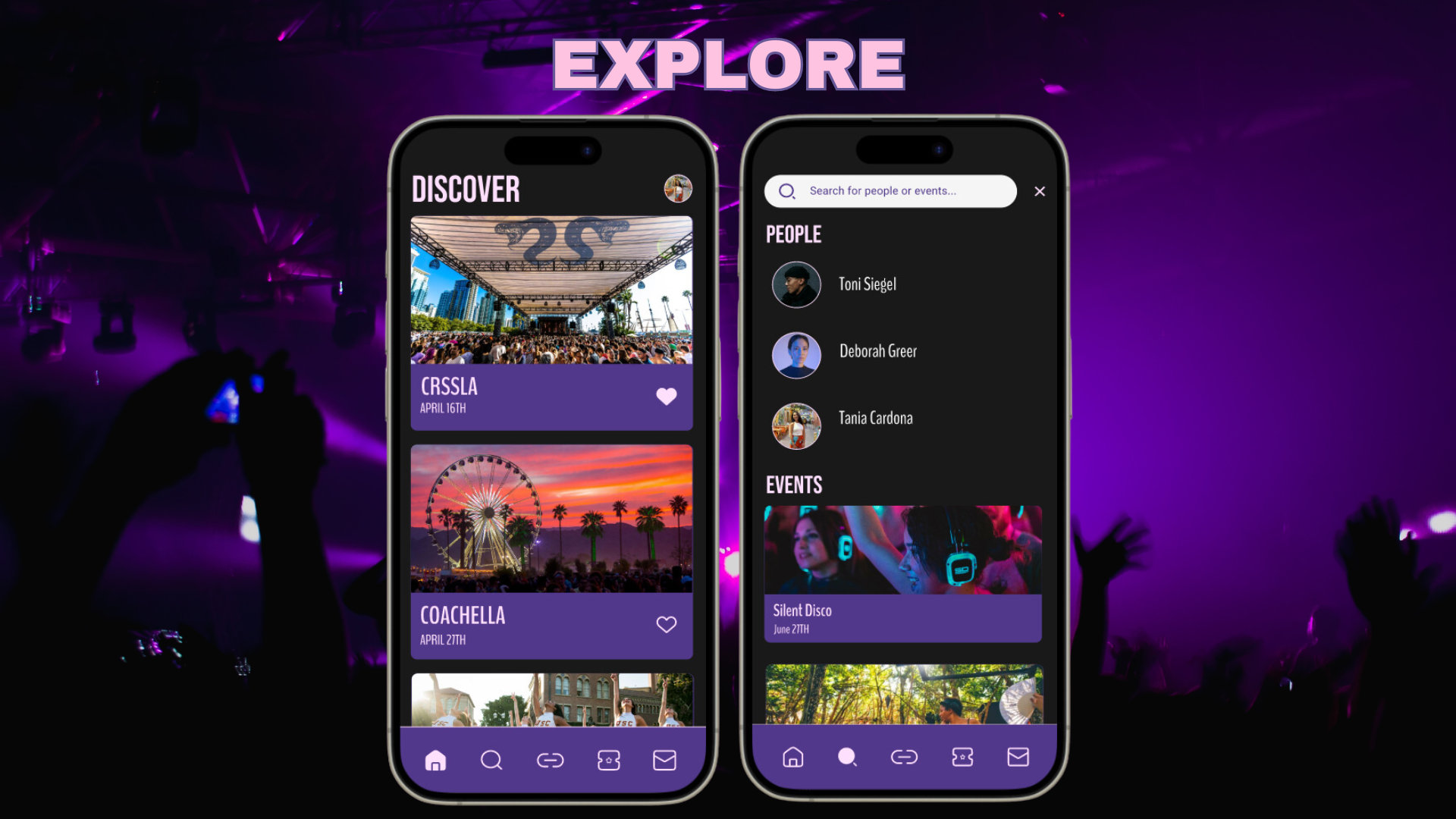
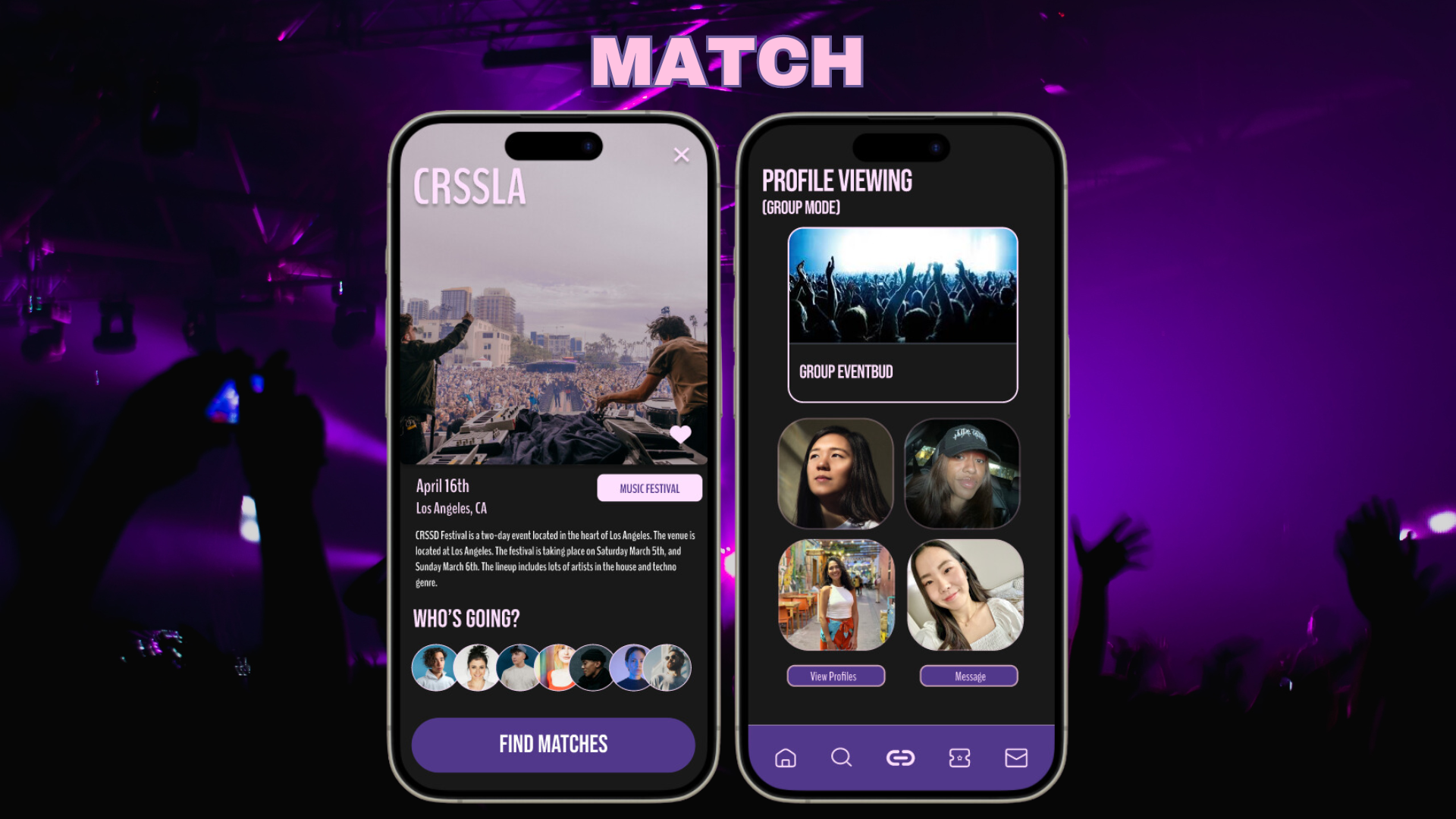
We made sure to emphasize our key features that make our app stand out. We have a questionnaire for onboarding, an explore page to see what events are popular, and a matching page where users can get matched up with people similar to them.
High-Fidelity Wireframes
Here are our final high-fidelity wireframes! Feel free to zoom in and out (ctrl+scroll) and drag the frame around to explore.
Prototype
Here's the final prototype! Feel free to click around and explore our app, EventBud.
Business Model, Competitive Analysis, and Go-to-Market Strategy
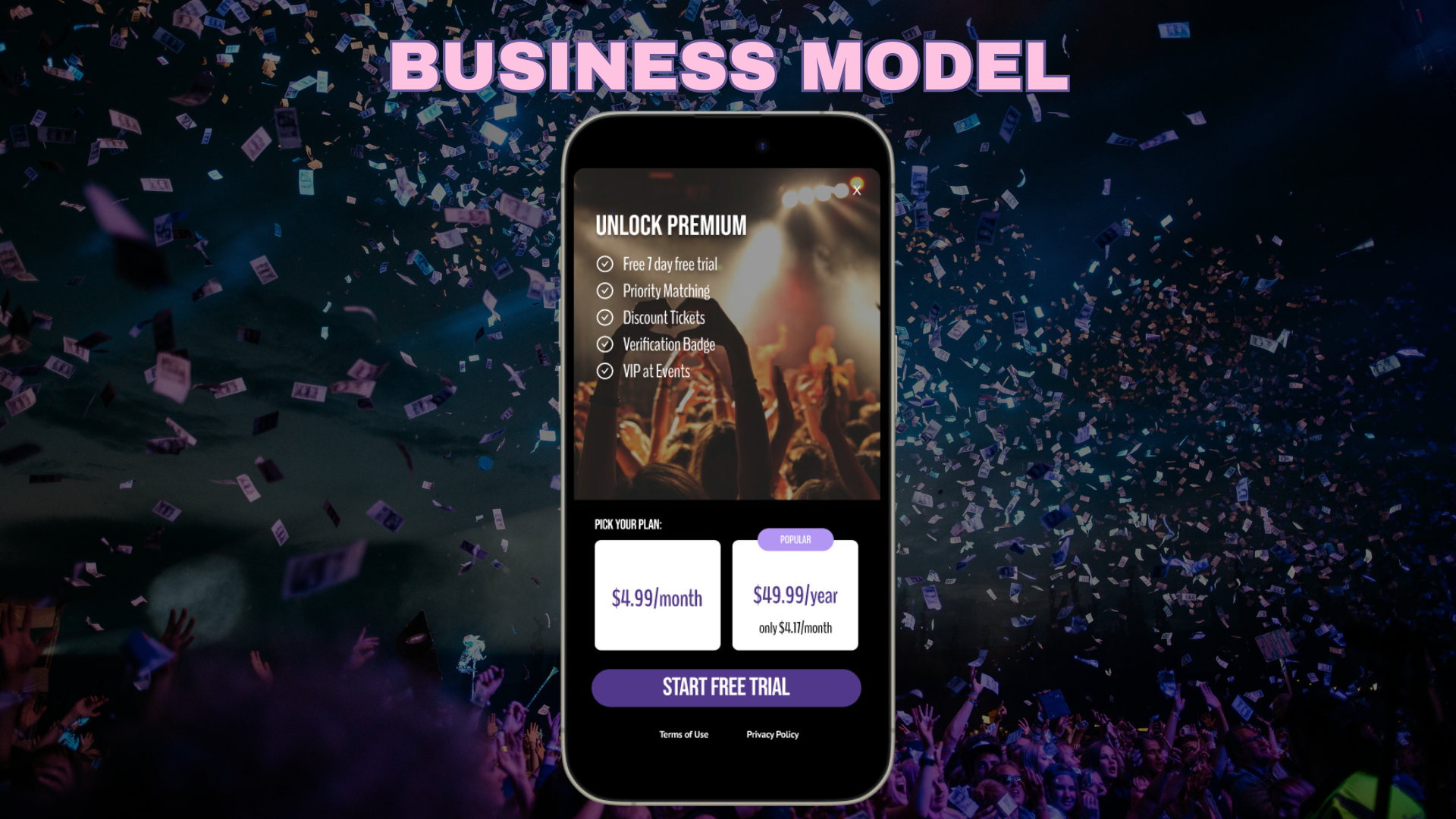
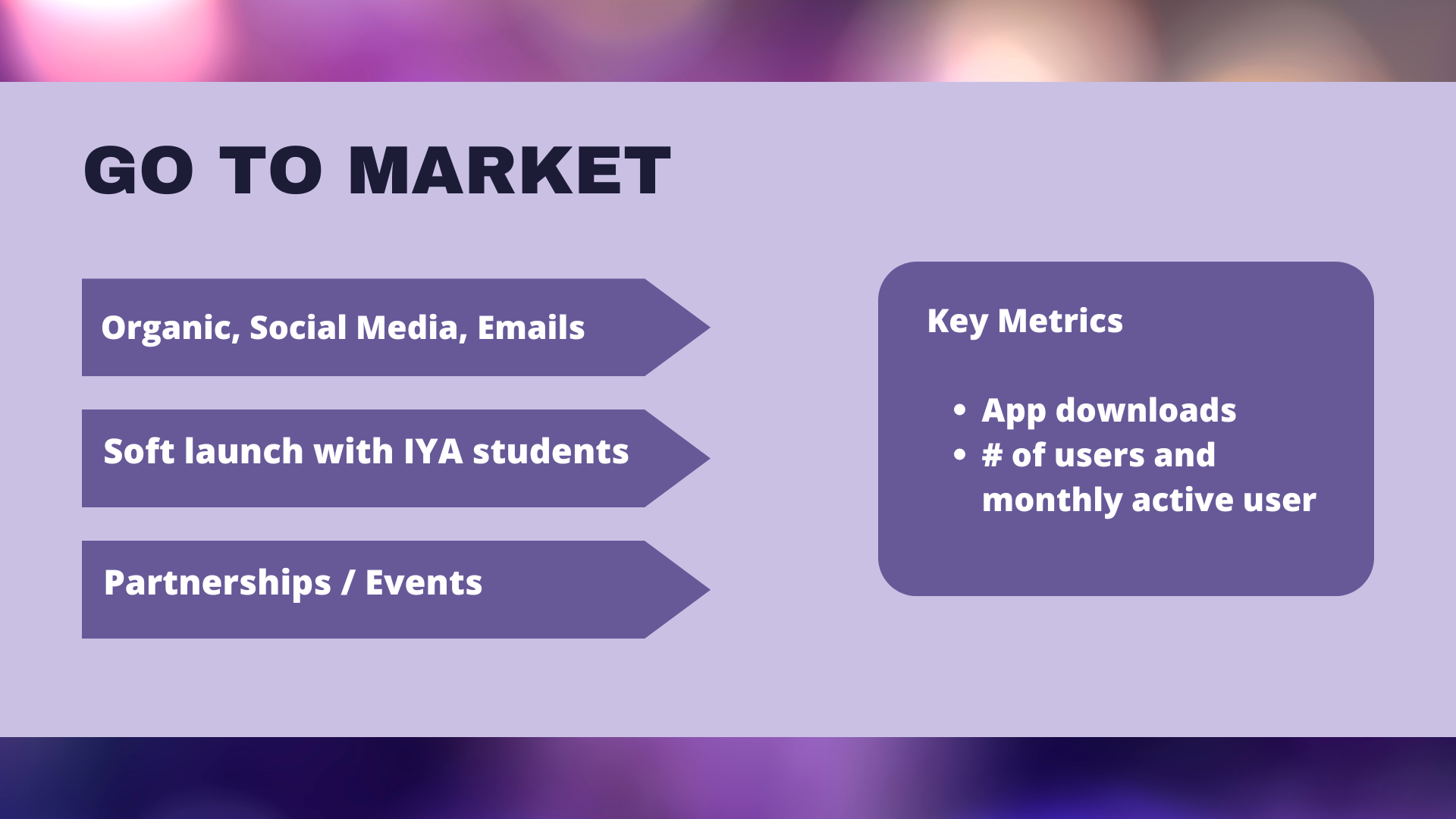
For our business model, we decided to go with a freemium model where the base app is free to use, but paying $4.99/month allows you to get priority matching along with other perks. Our go-to-market strategy is to advertise organically on social media and through emails and to soft launch our product with USC students in our department, Iovine and Young Academy. We also plan to foster partnership and attend events to increase brand awareness.
Reflection
This project was unique because we were constantly encouraged to go outside to do testing in the real world rather than spending more time on the typical storyboards or wireframes in the beginning. Going outside to test theories and talk to users proved to be very useful in understanding the problem on a deeper level before jumping into designing the application.